USA vs Canada Hockey: Breaking Down the Milan Gold Medal Race
The stage is set for an epic showdown at the 2026 Winter Olympics in Milan, where the age-old rivalry in men's ice hockey between the United States and Canada is once again poised to captivate the world. Both North American giants have stormed through their respective group stages and early knockout rounds, positioning themselves as prime contenders for the coveted gold medal. With the thrilling prospect of NHL players returning to the Olympic ice for the first time since 2014, the stakes have never been higher, and the intensity of Usa Vs Canada Hockey Mens competition is expected to reach unprecedented levels. Will Canada solidify its favoritism, or can Team USA break a decades-long gold medal drought?
The Return of NHL Stars: Reshaping the Olympic Landscape
The narrative of men's Olympic ice hockey has been significantly altered by the long-awaited return of NHL players. After absences in both the 2018 and 2022 Winter Games due to disagreements between the NHL and the International Olympic Committee, the 2026 Milan Olympics marks a pivotal moment. This reunion brings back the world's elite talent, transforming the tournament from a showcase of promising prospects and European league stars into a true best-on-best competition. Historically, this has often culminated in a clash between the North American powerhouses. Canada, with its deep talent pool, has been crowned Olympic champions multiple times, notably in 2010 after a thrilling final against the US in Vancouver, and again in 2014. The USA, despite accumulating 11 Olympic medals in ice hockey, has faced a challenging path to gold, with their last victory dating back to the legendary "Miracle on Ice" in 1980, and only one other triumph in 1960. The return of NHL stars injects an unparalleled level of skill, speed, and drama, making Milan 2026 not just another tournament, but a potential turning point in the storied history of Olympic Men's Hockey 2026: NHL Stars Return, Canada Favored.
This reintroduction of professional talent immediately elevates the level of play, demanding strategic adjustments from coaches and flawless execution from players. The speed of the game, the precision of passing, and the sheer physicality are all amplified when the world's top players don masks and jerseys for their national teams. For fans, it means watching hockey at its absolute peak, with household names battling for national pride. While Canada enters as the favorite, with the USA close behind as the second favorite in the men's tournament, the inclusion of NHL talent introduces variables that can swing any game, turning seemingly predictable matchups into nail-biting finishes.
Road to Milan: Group Stage Dominance and Knockout Challenges
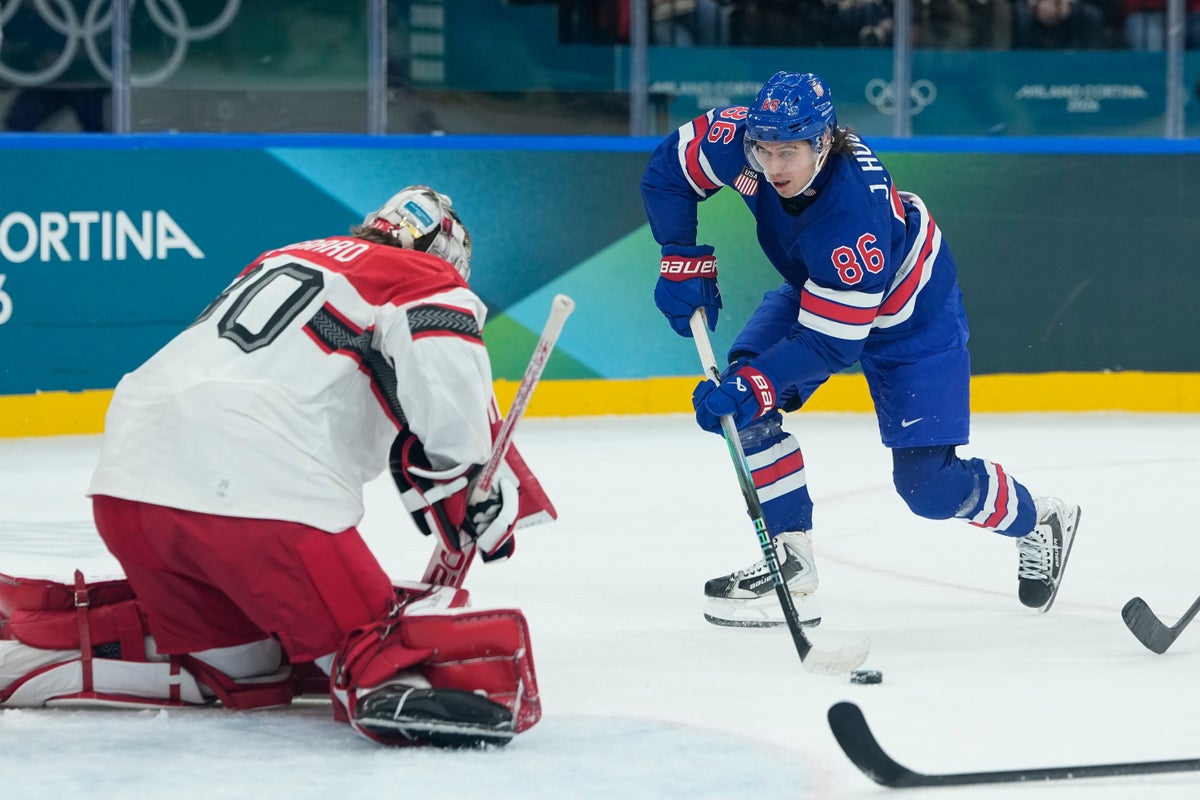
Both Team USA and Team Canada showcased their formidable strength from the very beginning of the Milan 2026 tournament, each topping their respective groups with dominant performances. Team USA, playing in Group C, started strong with a commanding 5-1 victory over Latvia on February 12th. They followed this with a 6-3 win against Denmark on February 14th and concluded their group stage by defeating Germany 5-1 on February 15th. Their disciplined play, potent offense, and solid goaltending ensured they progressed with maximum points.
Similarly, Team Canada left no doubt about their intentions in Group A. They opened their campaign on February 12th with a decisive 5-0 shutout against the Czech Republic. This was followed by another impressive 5-1 win over Switzerland on February 13th, culminating in a spectacular 10-2 rout of France on February 15th. Canada's scoring prowess and defensive integrity were on full display, sending a clear message to the rest of the competition.
As the tournament moved into the knockout rounds, the intensity ratcheted up. The Play-off round on February 17th saw some competitive games: Czech Republic edged Denmark 3-2, Sweden overpowered Latvia 5-1, Germany defeated France 5-1, and Switzerland secured a 3-0 victory over Italy. These matchups set the stage for the Quarter-finals on February 18th, where both North American powerhouses faced stern tests:
- Czech Republic 3-4 Canada: A tighter game than many expected, Canada showed resilience to overcome a determined Czech side, highlighting that even favorites can be pushed to their limits.
- Sweden 1-2 USA: Team USA delivered a gritty performance, securing a narrow but crucial victory against a strong Swedish squad. This win demonstrated their ability to perform under pressure and grind out results when their offensive fireworks might be contained.
- Germany 2-6 Slovakia
- Switzerland 2-3 Finland
These quarter-final results have led to tantalizing semi-final matchups scheduled for February 20th: Canada will face Finland, while the USA will go head-to-head with Slovakia. Should both North American teams prevail, it will set up the dream final on February 22nd, a highly anticipated clash for the gold medal. The Bronze medal match is slated for February 21st. All games are held at the state-of-the-art Milano Rho Ice Hockey Arena or the Milano Santagiulia Ice Hockey Arena, ensuring a world-class experience for players and fans alike.
Team USA's Golden Ambition: Navigating Roster Realities
Team USA arrives in Milan with a clear objective: to end their protracted gold medal drought stretching back to 1980. The optimism surrounding the return of NHL players is tempered by some unexpected roster realities. Despite the league's participation, not every top American NHL goal-scorer is on the Olympic roster. Notably, three of the top four American NHL goal-scorers this season – Jason Robertson (Dallas), Cole Caufield (Montreal), and Alex DeBrincat (Detroit) – are staying home. This absence raises questions about the "optimized American lineup" that could turn games against Canada into a "coin flip," as some analysts suggested.
However, the US roster is far from lacking talent. Players like Auston Matthews and Jack Eichel provide immense offensive firepower and playmaking ability, capable of generating crucial scoring chances. The intriguing pairing of the Matthew and Brady Tkachuk brothers, known for their skill and physical edge, playing alongside Eichel, could form a formidable and highly effective line. While the top of the US lineup might not quite match the sheer star power of Canada's elite, the overall American forward corps is deep and talented enough to hang together and pose a significant threat. The challenge for the coaching staff will be to maximize the chemistry and deploy lines that can exploit opposing weaknesses.
Defensively, the USA boasts formidable talent, spearheaded by Quinn Hughes, considered by many as a 1A counterpart to Canada's Cale Makar. Hughes' offensive instincts and smooth skating make him a potent weapon on the blue line. Zach Werenski emerges as a potential X-factor, known for his high-end offensive ability and strong performances in recent international tournaments like the 4 Nations. The American blue line has no obvious weaknesses, featuring a blend of defensive stalwarts and offensive-minded puck-movers. This balanced defensive corps provides a strong foundation for both offensive transitions and penalty killing.
Perhaps Team USA's biggest advantage lies in its goaltending. While specific names are often subject to last-minute decisions and form, American netminders consistently rank among the best in the NHL. This depth in goaltending could prove to be the critical difference in tight, low-scoring games, offering the confidence that one save can change the course of a match. For Team USA, the path to USA's Gold Quest: Can They End 45-Year Drought Against Canada? hinges on cohesive team play, timely scoring from their stars, and an impenetrable netminder. If they can overcome the absence of some key offensive contributors and leverage their strengths, a gold medal is certainly within reach.
Team Canada's Reign: Star Power and Unmatched Depth
Team Canada enters the Milan 2026 Olympics as the overwhelming favorite for the gold medal, a testament to their unparalleled depth and star power. At the pinnacle of their formidable lineup are two of the greatest forwards in the game today: Connor McDavid and Nathan MacKinnon. Their electrifying speed, incredible stick-handling, and scoring prowess make them arguably the two best forwards in the entire tournament, capable of single-handedly changing the momentum of a game. This dynamic duo alone provides Canada with an offensive edge that few, if any, teams can match.
Beyond their top-line superstars, Canada’s true strength lies in its extraordinary depth across all four lines. The reference context aptly highlights the luxury of having "third-line center Sidney Crosby" – a future Hall of Famer who, even in a supporting role, brings invaluable experience, leadership, and a relentless two-way game. This speaks volumes about the talent cascading throughout the roster. Furthermore, the inclusion of a "next-gen player on par with Macklin Celebrini" ensures that Canada's future is as bright as its present, bringing youthful exuberance and skill to complement veteran wisdom.
Defensively, Canada is anchored by Cale Makar, widely regarded as the best defenseman in the world. His offensive flair, defensive responsibility, and exceptional skating make him a game-changer from the blue line. Makar's ability to transition the puck, quarterback the power play, and shut down opposing attacks is unparalleled. Fittingly, the Canadian blue line, much like their American counterparts, has no discernible weakness. It is filled with players who perfectly fill particular needs, from bruising shot-blockers to swift puck-movers, ensuring a robust and versatile defensive corps. This combination of offensive wizardry at the top, unmatched forward depth, and a world-class defensive core makes Canada a formidable opponent in every aspect of the game. Their ability to roll four lines effectively and rely on an elite defensive unit means they can sustain pressure and wear down opponents over the course of a tournament, making them exceptionally tough to beat in the Milan Gold Medal Race.
The "Coin Flip" Factor: Key Matchups and Strategic Nuances
While Canada may be the favorites, the "coin flip" assessment of games against the USA accurately reflects the narrowing gap between these two hockey titans over the past decade. A potential Usa Vs Canada Hockey Mens final would undoubtedly come down to key matchups and strategic execution. For Canada, harnessing the offensive brilliance of McDavid and MacKinnon is paramount. Their ability to break open a game with a single rush or a blistering shot will be a constant threat. However, the USA’s defensive pairings, potentially featuring Quinn Hughes and Zach Werenski, will be tasked with containing these superstars, forcing them into less comfortable positions and limiting their space.
Conversely, Team USA's success will hinge on its depth generating offense, especially given the absence of some top NHL goal-scorers. The line featuring Jack Eichel and the Tkachuk brothers will need to be productive, leveraging their skill and physicality to challenge Canada’s blue line. Special teams – power plays and penalty kills – will likely play a decisive role. Both teams possess elite power-play units, and a single man-advantage goal could swing momentum irreversibly. Coaches will meticulously plan their penalty-kill strategies, aiming to neutralize the opposing team's key playmakers.
Goaltending, which was cut off in the reference context but often figures to be the U.S.'s biggest advantage, could be the ultimate differentiator. If the American netminder can steal a game or make critical saves at crucial moments, it could neutralize Canada's offensive firepower. On the other hand, Canada's solid goaltending provides a reliable last line of defense. The game will be won not just by individual brilliance, but by coaching chess matches, disciplined play, and the ability to capitalize on fleeting opportunities. Anticipate high-speed transitions, intense battles along the boards, and potentially an overtime thriller, all culminating in one nation claiming the ultimate glory.
The Milan 2026 Winter Olympics promises to deliver one of the most anticipated tournaments in recent memory, especially if the Usa Vs Canada Hockey Mens final materializes. The return of NHL players has reignited the passion and competitive fire, setting the stage for a dramatic conclusion to the Milan Gold Medal Race. While Canada boasts unmatched star power and depth, Team USA has proven its resilience and possesses the goaltending and defensive talent to challenge for gold. As the semi-finals approach, the hockey world holds its breath, ready to witness history unfold. Whether it's Canada extending its legacy or the USA finally breaking its long drought, one thing is certain: the clash between these two hockey giants will be nothing short of spectacular, etching another unforgettable chapter into the annals of Olympic ice hockey.